

The HCD knows how to win the Spengler Cup
15.10.2026, 10:00
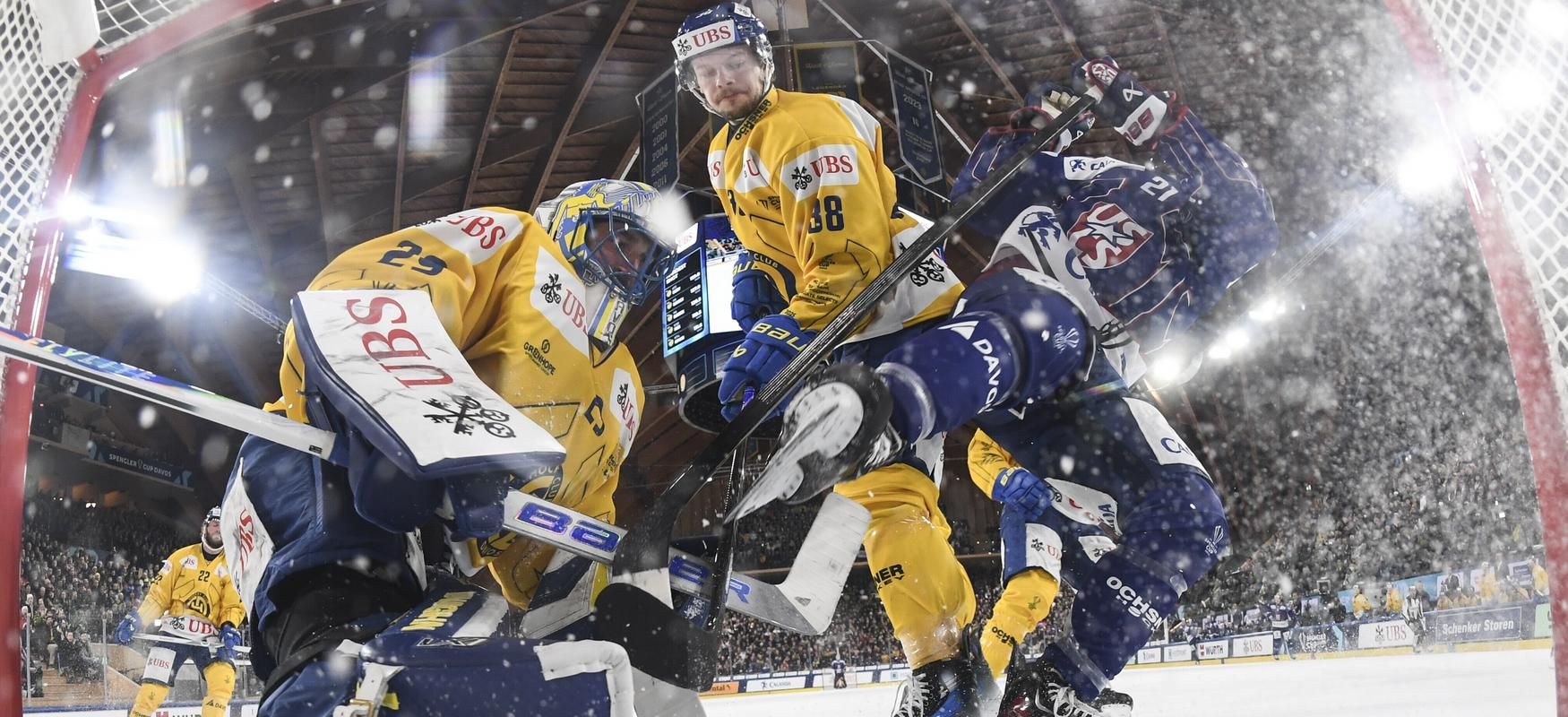
Why have HC Davos won the Spengler Cup twice in the past three years? The obvious answer is home advantage. But that only tells part of the story. Of course, no other team knows the conditions in Davos as well as the hosts. They do not have to travel, they know the ice, the arena and the routines. And they can count on the support of the home crowd. But the two title wins in 2023 and 2025 show that there is much more behind Davos’ success.
When HC Davos won the Spengler Cup for the 16th time on 31 December 2023, ending a 12-year wait, the triumph did not come as a complete surprise. Davos were also on their way back to the top in the National League. In the final, the HCD defeated Czech powerhouse Dynamo Pardubice 5–3. Just two years later, they lifted the trophy again – this time under very different circumstances.
The Spengler Cup is no ordinary ice hockey tournament. Within six days, each team has to play four or even five games. Recovery periods are short, opponents change constantly and playing styles can hardly be more different. While teams such as the US Collegiate Selects compete with a specially assembled roster, the HCD can rely on an established core of players who know one another from the National League.
That is an advantage in such a demanding schedule. The combinations are already in place, the skating routes are familiar and the tactical patterns are well established. The team does not need time to find its feet. Instead, it can focus on what matters most: the opponent at hand and the demands of the next game. Just how important this ability can be was demonstrated emphatically in 2025. The HCD lost their opening game against the US Collegiate Selects 5–3. The Americans’ high tempo and quick transitions caused the hosts considerable problems. Four days later, the two teams met again in the final. This time, Davos found the right answers. Despite the College Selects levelling the score three times, the HCD kept their composure and pulled away in the third period to win 6–3. This is one of Davos’ greatest strengths: the ability to adapt to different opponents. In 2025, the team had to respond to the fast-paced College Selects, the physically strong IFK Helsinki, Fribourg-Gottéron and, finally, the American selection once again – all within a few days. The tournament repeatedly demanded new solutions, and Davos found them.
The semi-final against Fribourg was particularly noteworthy. A year earlier, Gottéron had knocked the HCD out of the tournament at the same stage. In 2025, Davos gained revenge with a 3–1 victory. The hosts largely kept the Fribourg attack under control in the third period. It was Davos’ first win against a Swiss team at the Spengler Cup since the tournament adopted its current six-team format. That says a great deal about a team that has learned how to read this tournament. Not every game can be won in the same way. But every game demands a different response.
Experience is another factor that cannot be trained overnight. The HCD now know what it takes to play five games in less than five days. In 2025, the Davos players had to return to the ice for the final just over 12 hours after their semi-final, completing their fifth game in fewer than five days. Yet when it mattered most, the team did not look tired.
Home Advantage Is No Disadvantage
Of course, home advantage plays a role. The HCD play in familiar surroundings, while the other teams spend only a few days in Davos. The hosts know the arena, the routines and the environment. They stay at home, sleep in their own beds and work out of their familiar dressing room. Their bodies are also accustomed to Davos’ altitude of 1,560 metres above sea level.
This certainly helps offset one small disadvantage the hosts face: as one of the two teams that enter the tournament on the second day, Davos do not get a guaranteed rest day. In the worst-case scenario, the HCD have to play five games in five days. In a tournament where energy becomes increasingly important with each passing day, the support of the crowd can make all the difference.
In the 2025 final, Davos were visibly close to their physical limits after a long tournament. But the atmosphere in the arena gave the team an additional boost. Home advantage is real. What matters, however, is how a team makes use of it. Josh Holden has played a particularly important role in this development. The Canadian won the Spengler Cup in 2023, his first season as HCD head coach, and led Davos to the title again two years later. By now, Holden knows not only his team but also the unique demands of the tournament. He understands when the workload can become a problem, when a player needs a break and when a team must respond after a setback.
Perhaps that is the most important difference between 2023 and 2025: the HCD now know that the Spengler Cup is not something you win on the side. The tournament requires a specific approach – and Davos have found it.
Winning the Spengler Cup twice in three years is therefore hardly a coincidence. In 2023, Davos returned to the top of the tournament after a 12-year absence. In 2025, the HCD proved that their first triumph was no one-off. After losing their opening game against the US Collegiate Selects, the team improved as the tournament progressed, overcame a variety of opponents and gained revenge in the final against the very team that had caused them the greatest problems earlier in the week.
HC Davos have once again made the Spengler Cup part of their identity. Home advantage helps, an established team provides confidence and experience makes it easier to cope with the workload. But the decisive factor is that Davos have learned to adapt to the unique demands of this tournament.
The HCD now know not only how to win the Spengler Cup. They know how to play Spengler Cup hockey.
Text: Spengler Cup-Onlineredaktion Foto: Keystone

Presenting Partner

Gold Partner


OFFICIAL BROADCASTER
